Technologies do not stand still and every year new materials appear that make it easier and better to build.
Why More Homeowners Are Switching to SIP Roofs
If your roof is ageing, leaking, or simply underperforming on insulation, a straightforward re-tile or patch-up isn’t always the best long-term fix. A growing number of homeowners and builders are instead choosing SIP roof panels – structural insulated panels that combine the roof deck, structure, and insulation into a single, factory-made unit. The result is a faster installation, a tighter building envelope, and noticeably lower energy bills once the work is done.
SIP Roof Panels vs Traditional Roof Insulation
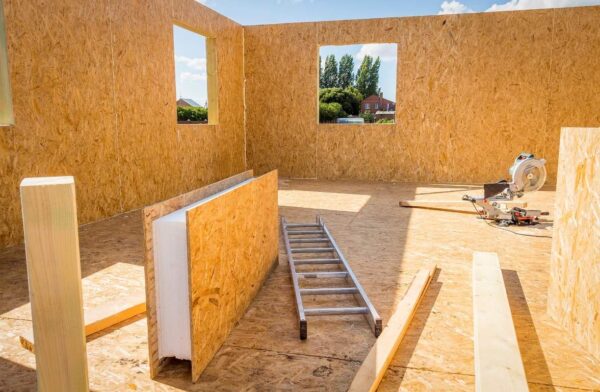
The biggest difference between SIP roof panels vs traditional roof insulation comes down to how the insulation is built into the structure. With a conventional roof, insulation is fitted between or under rafters on-site, which leaves room for gaps, thermal bridging, and inconsistent coverage. SIP panels, by contrast, arrive as a solid, pre-insulated unit – the foam core is bonded between two structural facings before the panel ever reaches your roof.
This construction method offers several practical advantages:
- Fewer thermal bridges, since there are no exposed rafters interrupting the insulation layer
- Faster on-site installation, often cutting roofing time from weeks to days
- Higher airtightness, which directly improves heating efficiency in colder European and specially North European winters
- Less on-site waste, since panels are precision-cut in the factory rather than trimmed on-site
For homeowners weighing up a full roof replacement, this combination of speed and performance is often what tips the decision in favour of SIP.
How Much Does It Cost to Replace a Roof with SIP Panels?
This is naturally one of the first questions homeowners ask, and the honest answer is: it depends on the size, pitch, and complexity of your roof, as well as regional labour rates. That said, SIP roofing is generally competitive with, or better value than, traditional roofing once you factor in the reduced labour time and long-term energy savings.
To put it in context, average roof replacement cost UK per m2 for conventional methods typically ranges quite widely depending on materials and roof complexity – and SIP panel roofing sits within a similar bracket for materials, while often reducing the labour portion of the bill thanks to faster fitting. Because SIP panels are manufactured to size off-site, quotes tend to be more predictable too, with fewer surprise costs once installation begins.
The most reliable way to get an accurate figure for your specific project is a direct quote based on your roof’s measurements and design.
Choosing the Right SIP Roof Panel Supplier
Not all panels are created equal, and the supplier you choose matters just as much as the material itself. When comparing a SIP roof panels UK supplier, it’s worth checking for:
- European Technical Assessment (ETA) and CE certification
- Consistent panel quality and manufacturing tolerances
- Clear technical support for your installer or roofing contractor
- A track record of completed residential and commercial roofing projects
ECOPAN manufactures certified SIP panels used in both full house builds and roof replacement projects across Europe, giving UK homeowners and builders access to a proven, factory-finished roofing solution backed by consistent quality control.
Ready to Explore a SIP Roof for Your Home?
If you’re weighing up your options for an upcoming roof replacement, getting a tailored estimate is the best next step. Reach out with your roof dimensions and project details, and we’ll help you understand exactly how SIP panels compare for your specific home.